
During ImpactFest 2025 in The Hague, we spoke with Shawn Guttman, the founder of Didi, about how data and technology can help identify moments when peace might become possible. Therefor he is following the 30-year-old Ripeness Theory of Dr. I William Zartman. In this interview, he shares how the platform works and why a data-driven approach can offer new perspectives on one of the world’s most closely followed and deeply complex conflicts.

A data-driven approach to identifying peace opportunities
Didi is a new tool that offers a fresh approach based on data models. These data models currently report from 60 Hebrew–Israeli news outlets and 30 Arabic–Palestinian news sources, the platform generates a real-time data model designed to identify moments when conditions may be favourable for peace negotiations between Israel and Gaza. By bringing together information from media ecosystems that rarely intersect, the tool seeks to create a more comprehensive picture of the public mood and political climate across both communities.
The Didi AI dashboard that shows the increase in sentiment of a "willingness to compromise"

“Didi is not about predicting peace or offering political solutions. It is about identifying signals in data that suggest when dialogue might become possible, and making those signals visible to the people working on the ground.”
Turning ripeness theory into practice
The idea for Didi comes from Shawn, a Canadian-born founder who has lived in Israel since 2010. His long-held wish to contribute to a future based on coexistence and a two-state solution has shaped the direction of the startup. Rather than proposing political answers, the platform focuses on identifying moments of ripeness, a cornerstone theory in diplomacy and negotiations that, when present, increases the likelihood of successful negotiations and their ratification. By analysing patterns in language, sentiment, and events across different narratives, the tool aims to help professionals working in diplomacy, policy and mediation to recognise shifts that might otherwise go unnoticed.
At this stage, the pilot programme behind Didi is being driven by a coalition of peacebuilding NGOs, local and grassroots organisations. Their involvement ensures that the technology is shaped by those with deep practical experience in conflict resolution and community engagement. This collaborative model is intended to keep the platform aligned with needs, providing insights that are both contextually grounded and operationally useful for practitioners seeking openings for dialogue.
Identifying emerging opportunities for peace
While still developing, Didi reflects a growing interest in harnessing technology to support peacebuilding. For Shawn, the ambition is not to replace human judgement but to offer an additional lens—one grounded in data from both sides—to support decisions made in a complex and deeply human conflict. The hope is that, over time, tools like this will help illuminate opportunities for progress that might otherwise remain hidden.
Shawn Guttman of Didi & Donata Garrasi of INCAS participating in a PeaceTech meeting at ImpactFest 2025

Read more about Peace & Justice initiatives in The Hague
Peace Today
At Peace Today, we endeavour to uncover and share the world’s stories because our mainstream media has lost its diversity and ability to represent different points of view.
Watch our interviews and listen to our podcasts with prominent figures and thinkers who are listening and talking for peace.

Shelter City The Hague
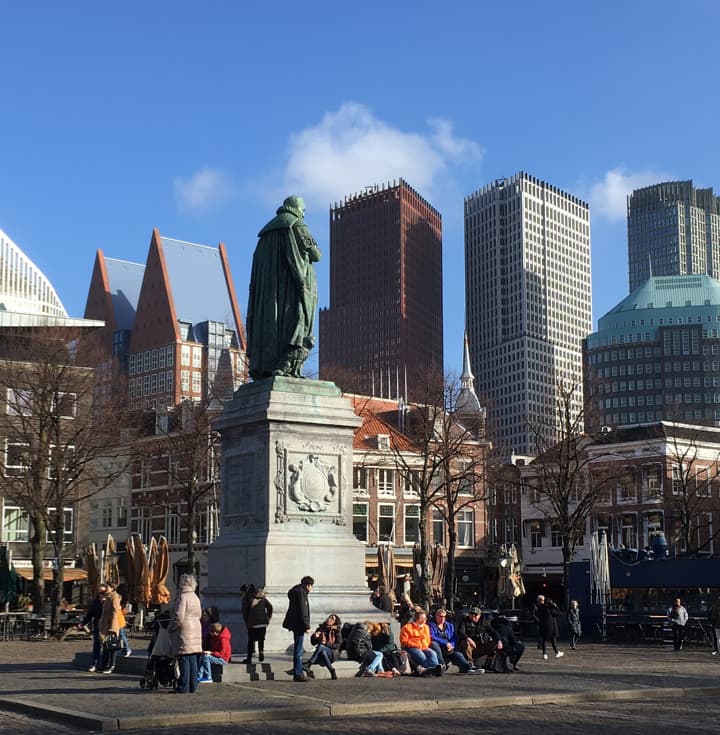
Shelter City The Hague was founded in 2012 by Justice & Peace with support of the municipality of The Hague, as a concrete and accessible way to support human rights defenders at risk. The Hague’s multicultural community and diverse network of organizations, policy makers, students and justice workers makes The Hague an inspiring space for human rights defenders.


Just Peace
Our mission is to make peace and justice accessible, relatable, and engaging for everyone. By showcasing impactful initiatives, sharing inspiring narratives, and fostering meaningful connections, we encourage year-round engagement between organizations and the public.

More on Impact

How a startup in The Hague is protecting our planet and its people

The Hague brings sustainable living closer to residents with local pop-up advice desk
