Heliora Energy is building a pilot technology that converts surplus electricity and heat into thermal energy that can be used when power demand is high. The project is now moving into the prototype phase, supported by the Municipality of The Hague through its CO2 reduction programme.
Storing “waste” energy in sand
The idea came from co-founder Peter Enting’s experience working in the industrial sector. He observed that materials such as sand and slag (a waste material derived from metals) can retain high temperatures for extended periods. This inspired him to use similar materials to store thermal energy.
While the concept of thermal energy storage is not new, Heliora Energy’s technology focusses on limiting energy losses and improving system efficiency. The team is developing a way to convert electricity directly into heat that is stored in a particular sand mixture. To date, their tests show above 90% of energy retention after conversion.
Pilot project with the Municipality of The Hague
The project moved forward after Heliora Energy won a CO2 reduction challenge organised by the Municipality of The Hague and ImpactCity. The programme is part of a wider Startup in Residence Intergov initiative, where public organisations act as pilot customers for early-stage solutions.
Over the next six months, Heliora Energy and the municipality are developing a prototype that can store both excess electricity and heat in sand. The system will take the form of a 20-foot container with a storage capacity of around 1 MWh. Enough to power about 100 homes for an entire day.
The sand battery will be built off-site and transported to The Hague for testing. The team expects to install it at a location with a constant heat demand, such as a swimming pool. There, it can store solar energy during the day and release it later when demand rises. According to Enting, a container could reduce CO2 emissions by 20 – 35 tonnes per year depending on how the system is operated.
The system is expected to be running by the end of the year, followed by a testing period of around three months.
Addressing energy system challenges
The project focuses on a common issue in energy systems: supply and demand do not match. According to Enting, the challenge is not the availability of renewable energy, but how it is used. During peak production, for example on sunny or windy days, excess electricity often cannot be fed into the energy grid. In some cases, production is reduced or stopped altogether.
Heliora Energy’s system stores this surplus as heat. That heat is then used directly instead of being converted back into electricity, which would lead to additional losses. This addresses the fact that half of the world's final energy consumption is for heating, and according to the World Economic Forum, contributes to 40% of energy-related CO2 emissions.
From prototype to scale
With a working prototype, the next step is to scale up. The company is simultaneously exploring applications in industrial environments and district heating networks, where larger systems could store significantly more energy. Future installations could take the form of large sand-filled silos, potentially built underground to increase capacity. The long-term ambition is to develop systems that can store energy at scale and supply heat to multiple buildings or industrial processes.
If proven successful, this technology could offer a practical way to reduce energy waste, ease pressure on the electricity grid, and support the transition away from fossil-based heating.
Photo: Co-founders of Heliora Energy (from left to right) Tomasz Tunajek, Peter Kortlever, Peter Enting.
Gezocht: innovatieve oplossingen die direct bijdragen aan CO₂-reductie binnen de Haagse stadsgrenzen.
Gezocht: innovatieve oplossingen die direct bijdragen aan CO₂-reductie binnen de Haagse stadsgrenzen.


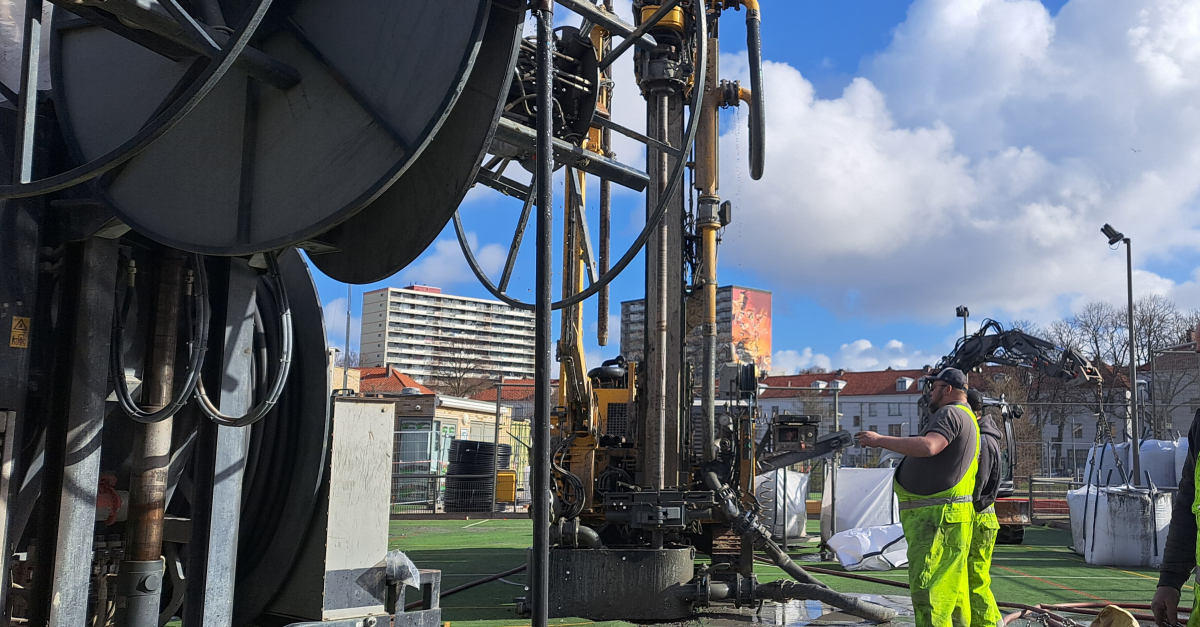
Three schools and a childcare centre to be heated by sports field
A football pitch in The Hague will heat three schools and a childcare centre using captured solar heat from artificial turf ...
