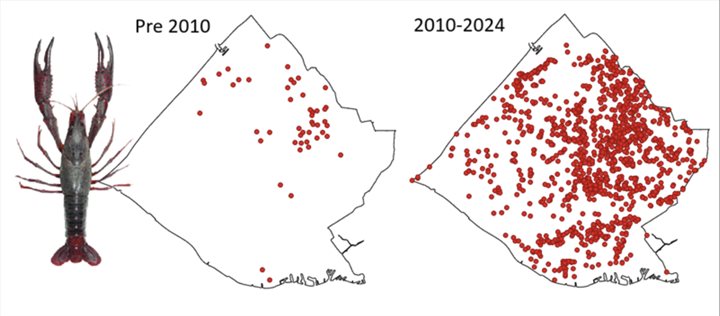
Invasive American crayfish have been spreading rapidly across the Netherlands since 2010, putting growing pressure on waterways, aquatic ecosystems, and flood protection infrastructure. In the Delfland region, riverbanks are weakening, aquatic plants are disappearing, and water quality is deteriorating. To tackle the problem, Delfland Water Board is scaling up research and intervention to restore ecological balance and protect vital water infrastructure.
Non-native crayfish species multiply and disrupt the ecosystem
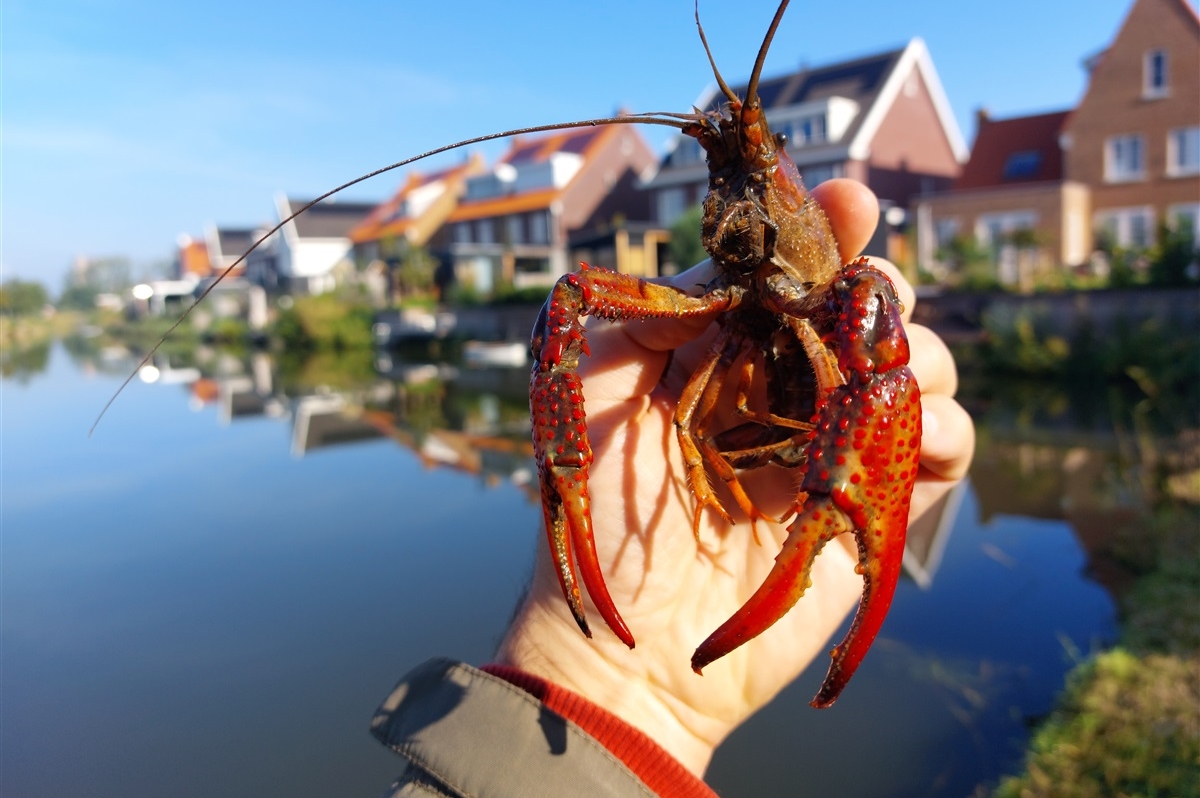
American crayfish are non-native species that have spread quickly throughout Dutch waterways over the past decade due to the lack of natural predators. Species such as the red swamp crayfish, spotted crayfish and striped crayfish burrow into embankments and dykes, uproot underwater vegetation and stir up sediment, turning clear water murky.
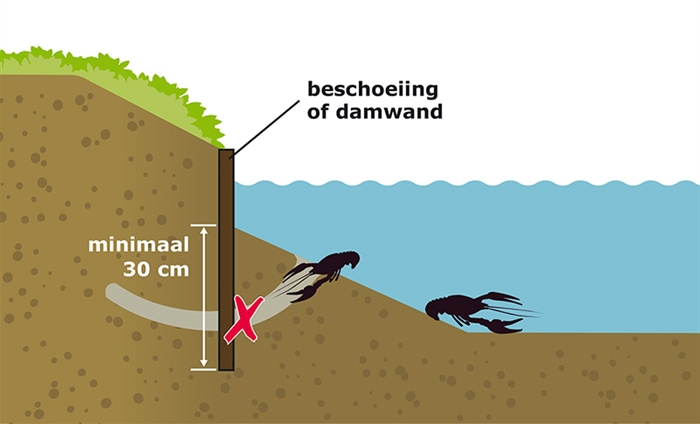
As less sunlight reaches the water, aquatic plants disappear, and ecosystems fall further out of balance. Their burrowing activity also weakens riverbanks, dykes, and water control systems — infrastructure that Delfland maintains to help protect residents and surrounding areas from flooding.
Tackling the problem through research and collaboration
Since 2020 Delfland have been working with organisations including Wageningen University & Research and the Province of South Holland to better understand how to control the species effectively.
The research focuses on two key areas. The first examines how dykes, riverbanks, and water structures can be made more resistant to crayfish burrowing. The second investigates trapping methods that minimise disruption to other wildlife.
In Summer 2024, Delfland launched a pilot project in the wetland areas Oude Spui and Lierwatering. The pilot explored whether reducing crayfish numbers could help aquatic plants recover and improve water quality. Early findings suggest trapping is most effective in enclosed waterways, where the entire area can be systematically managed.
Building on the first results, Delfland has expanded the programme since Spring 2026. The organisation has started to reduce crayfish populations in ten wetland areas while closely monitoring biodiversity and water quality. In 2027, the approach is expected to expand further to 170 locations, covering approximately 59 kilometres of riverbank across the region. Where possible, captured crayfish will also be reused for food production, contributing to a more circular approach to the problem.
A challenge beyond the region
According to Delfland, invasive crayfish are not only a regional issue but a national responsibility. Under European legislation, the Dutch Ministry of Agriculture, Fisheries, Food Security and Nature is responsible for managing invasive exotic species.
In June 2025, Delfland formally called on the ministry to take stronger action to limit the spread of crayfish and support the restoration of damaged ecosystems. The water authority argues that the financial burden of tackling this growing national problem should not rest solely with local residents and regional authorities.
As climate adaptation and biodiversity restoration become increasingly urgent across Europe, Delfland’s approach highlights how regional water authorities in the Netherlands are combining ecological research, infrastructure protection, and innovation to safeguard the future of their waterways.
Amerikaanse rivierkreeften - onze aanpak om waternatuur te beschermen
De waterkwaliteit en biodiversiteit in Delfland staan onder druk door de grote aanwezigheid van Amerikaanse rivierkreeften die het watersysteem verstoren en schade veroorzaken. In 2027 gaat Delfland grootschalig Amerikaanse rivierkreeften terugdringen op 170 locaties via een aanbesteding.

Rivierkreeften: Delfland spreekt ministerie aan op uitvoeringsverantwoordelijkheid
Het hoogheemraadschap vraagt LVVN om een besluit te nemen en zorg te dragen voor de naleving van de regels uit de Exotenverordening.